Xano
Connect to your Xano instance to interact with your data in your Softr apps.
Xano is a powerful backend-as-a-service platform that enables you to build and manage databases, APIs, and business logic without writing code. By integrating Xano with Softr, you can seamlessly use your Xano data in your Softr applications.
This integration allows you to:
-
Store and retrieve structured data dynamically
-
Use API-driven workflows in your Softr apps
-
Securely manage and scale your backend
1. Connect Xano to Softr
To use Xano in Softr, you need to connect your Xano instance as a data source. Note that once connected, all workspaces inside an instance will be available inside your Softr apps.
Open the database connector in Xano
-
Log in to Xano and go to the server instance you want to connect.
-
Click the gear icon next to the server instance.
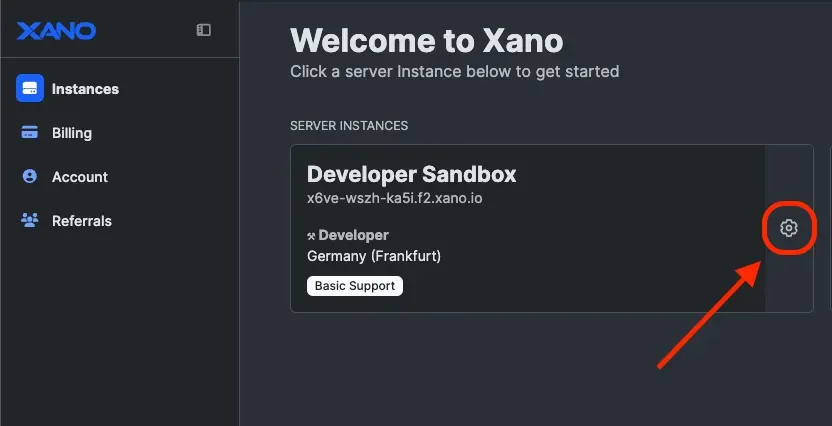
Click on the gear icon next to the server instance you want to connect to. -
In the menu on the right, select Database Connector.
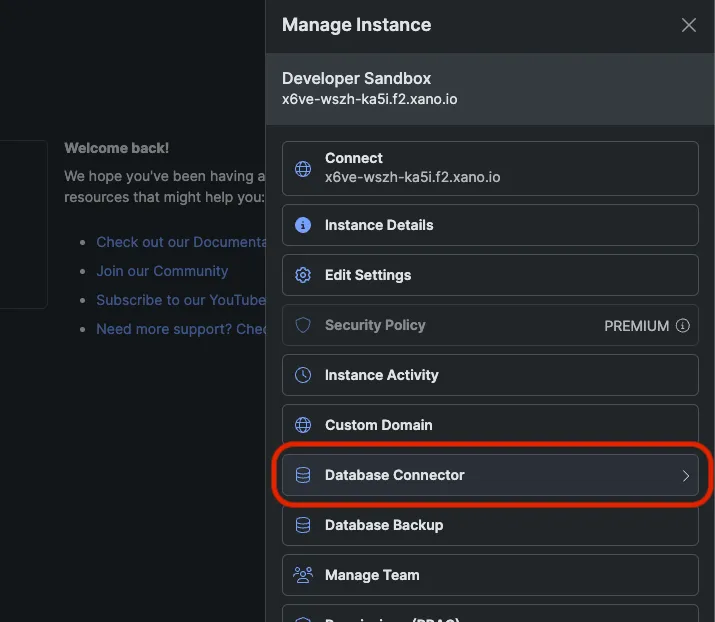
Select the Database Connector option


Generate your instance’s public IP and credentials
In order for Softr to be able to access your instance, you’ll need to create a publicly accessible IP address and get some credentials so that only those with the credentials can access it.
-
Click the GET buttons to generate:
-
A public IP address (required for Softr to access Xano)
-
Access credentials (used to authenticate Softr)
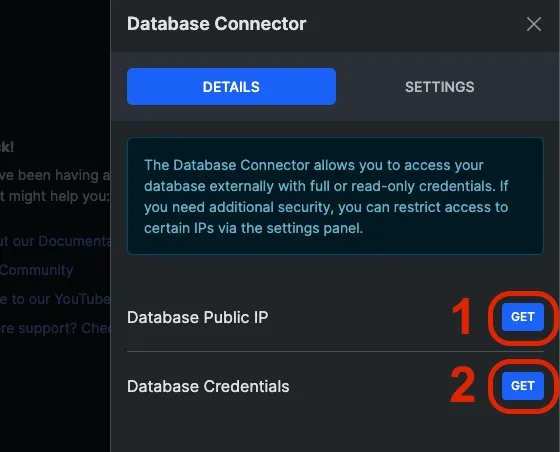
Click the GET buttons to generate a public IP and server credentials.
-
-
Copy and securely store your credentials. By default, they are hidden for security reasons. Click Show credentials, then copy and save them in a secure location.
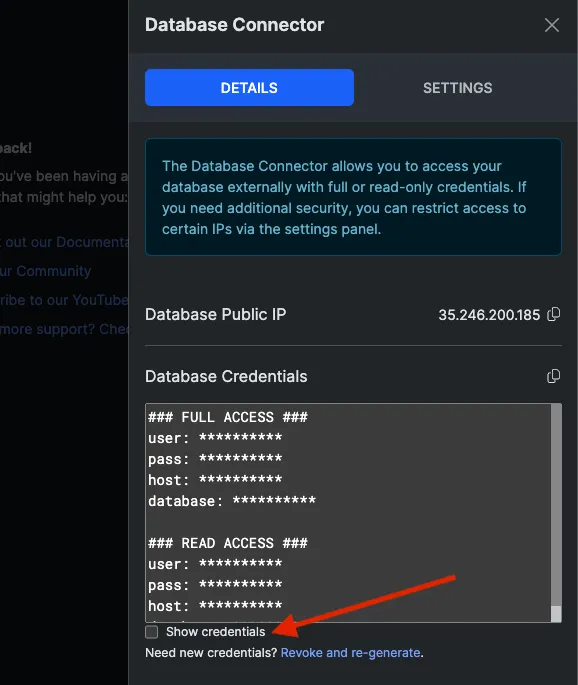
Click on Show credentials to reveal them


Allow Softr’s IP addresses in Xano
-
Go to the Settings tab in the Database Connector.
-
Click + Add and enter the following Softr IP addresses:
3.120.79.2123.123.159.18652.58.246.121
-
Click Save.
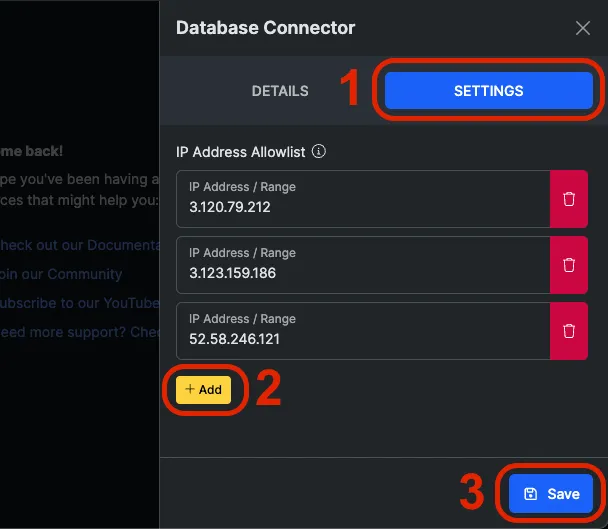
Click on the settings tab, add Softr’s IP addresses, then click Save.

Connect Xano in Softr
-
In the Softr Studio dashboard, click Integrations in the left menu.
-
Click Connect new.
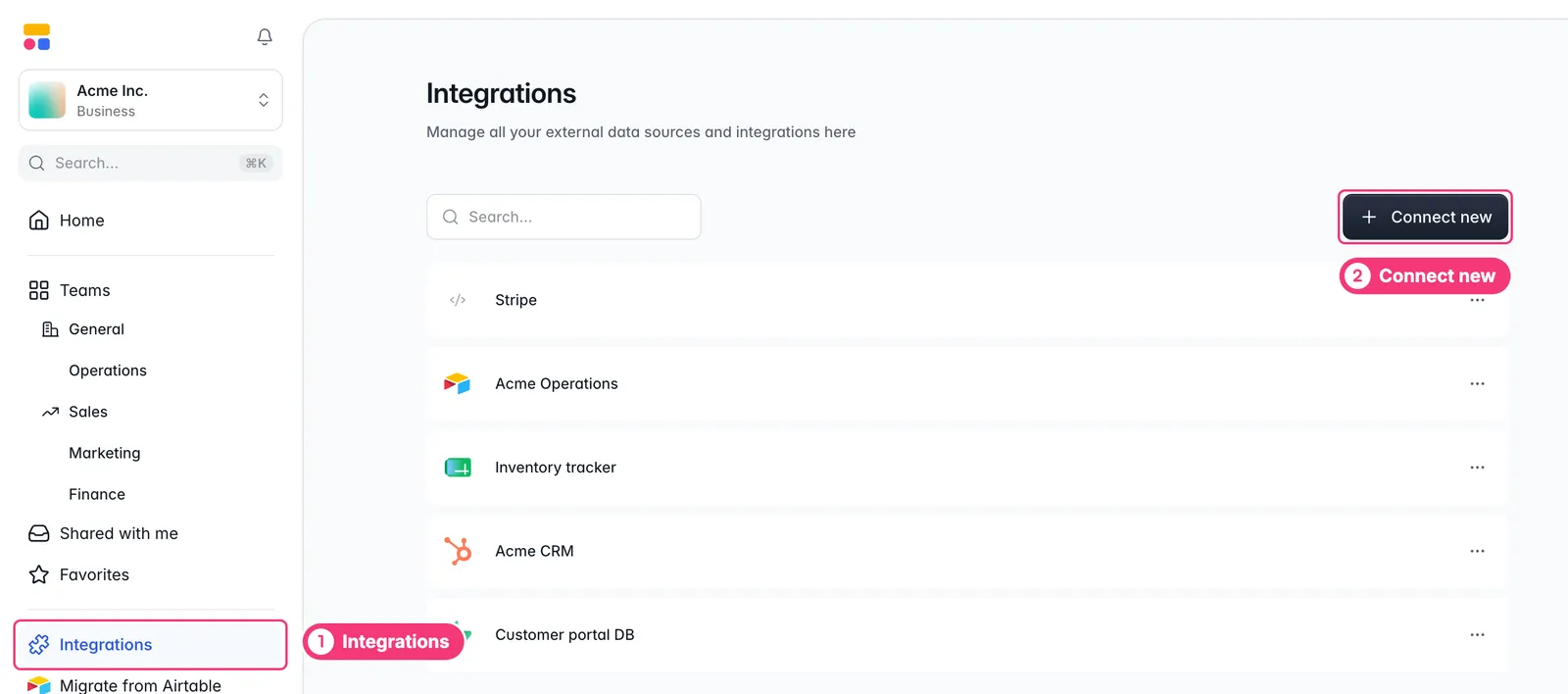
The Integrations page, with the Connect new button -
In the Select an integration window, click Xano.
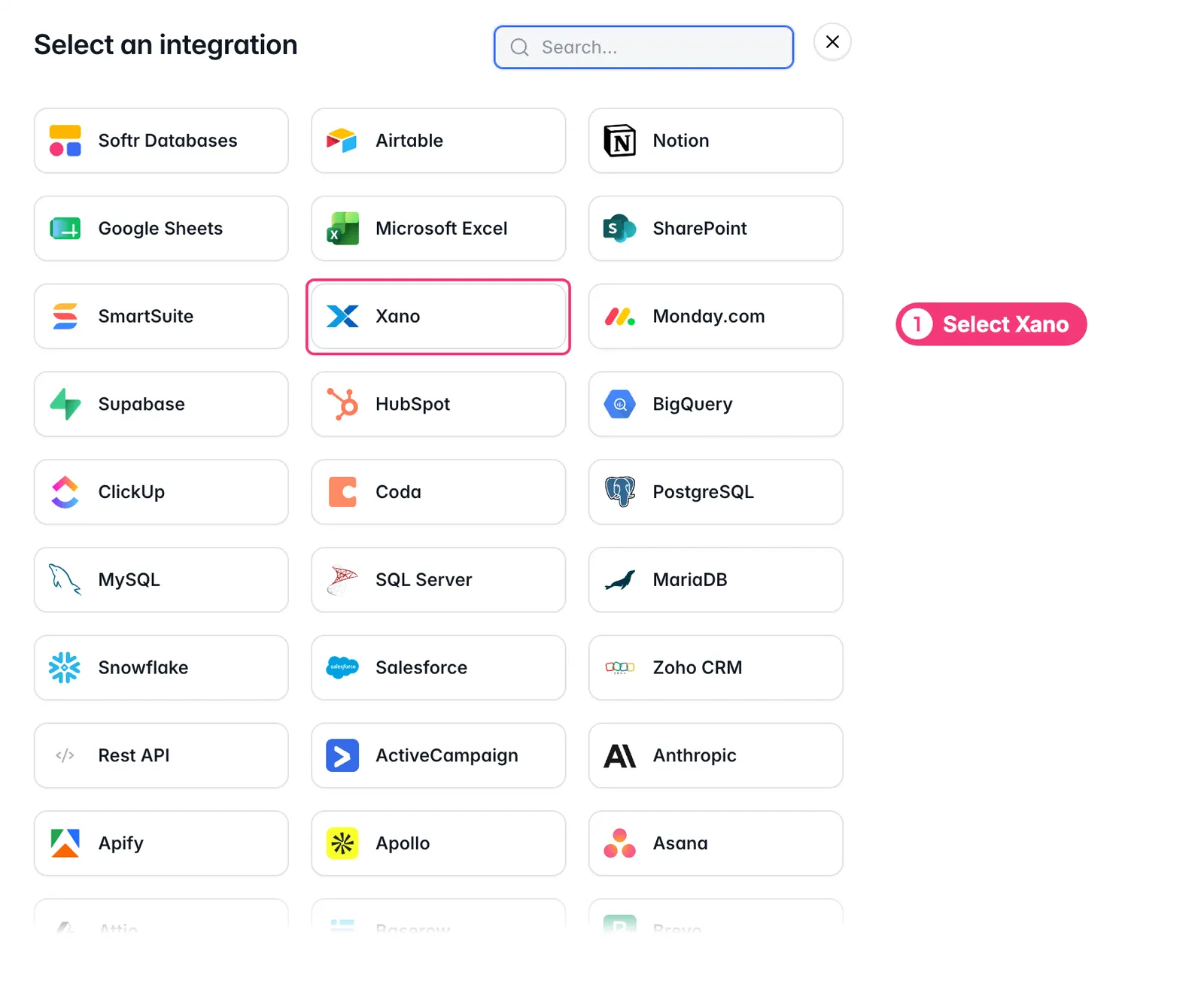
The Select an integration window, with Xano selected


Enter your Xano credentials in Softr
Note that you have Full Access credentials as well as Read-Only credentials, so make sure to use the correct ones for your use case. We always recommend using the Full Access credentials so you don’t have to re-authenticate later if you expand your Softr apps’ capabilities.
-
Copy and paste your Xano credentials into the appropriate fields in the Connect to Xano database window:
- User
- Password
- Host
- Database
-
Leave Port set to
5432(default for Xano). -
Enter a Name for your connection (optional). Leave Environment set to
live.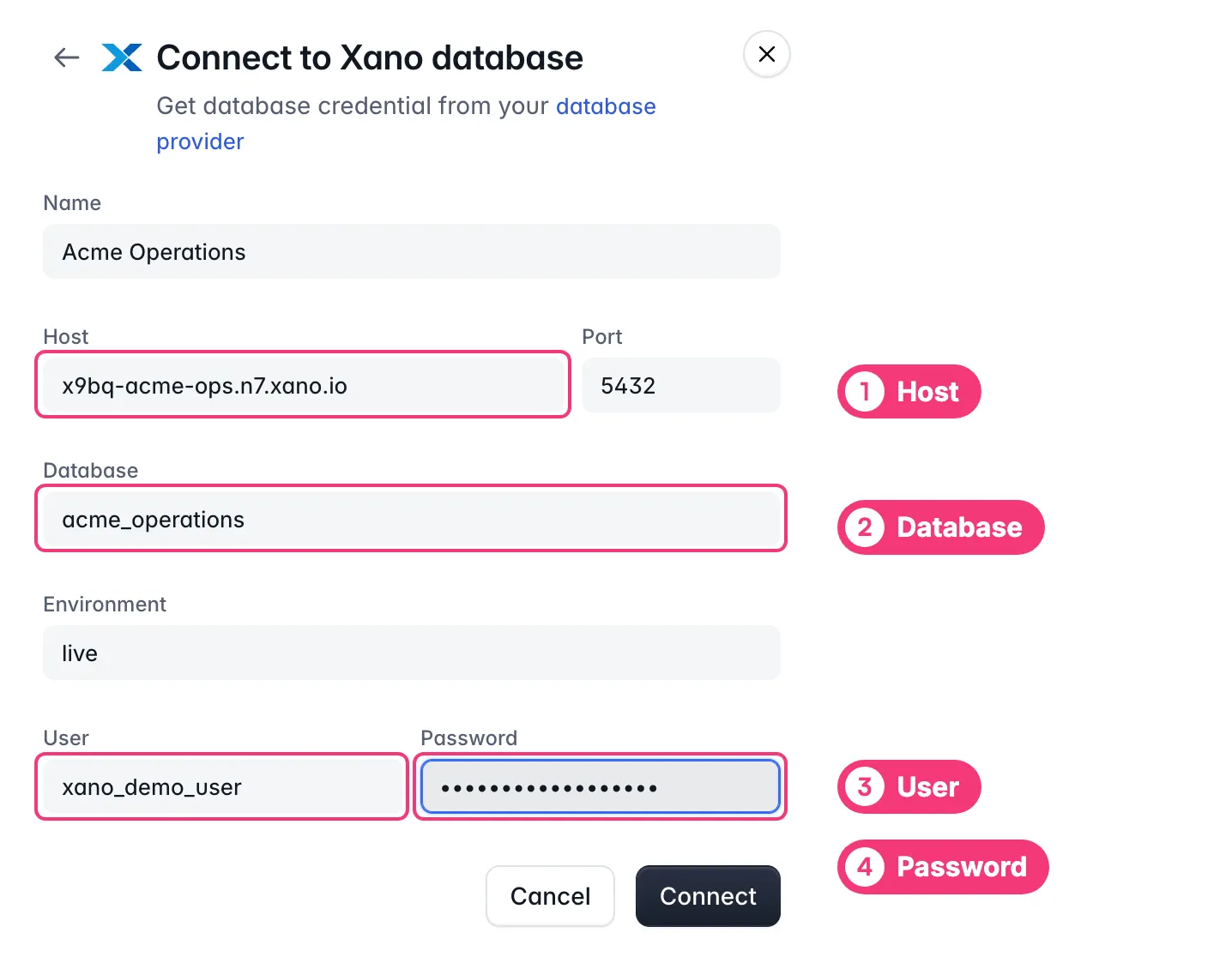
Fill in the fields with the parts of your server credentials.

Click 'Connect' to complete setup
Once all fields are correctly filled in, click Connect to finalize the connection.

2. Connect your Xano data to your Softr app
Once your Xano account is connected, you can use it in any Softr application.
Connect your data to a dynamic block
To display your data in the app, connect a dynamic block (e.g. List, Grid, Table) to your Xano table:
-
Open the Source tab of the block settings.
-
In Account, select your Xano connection.
-
In Workspace, select the workspace you want to connect.
-
In Table, pick the table you want to use, or select the Query tab to add a new query.
-
Optionally, select the primary field.
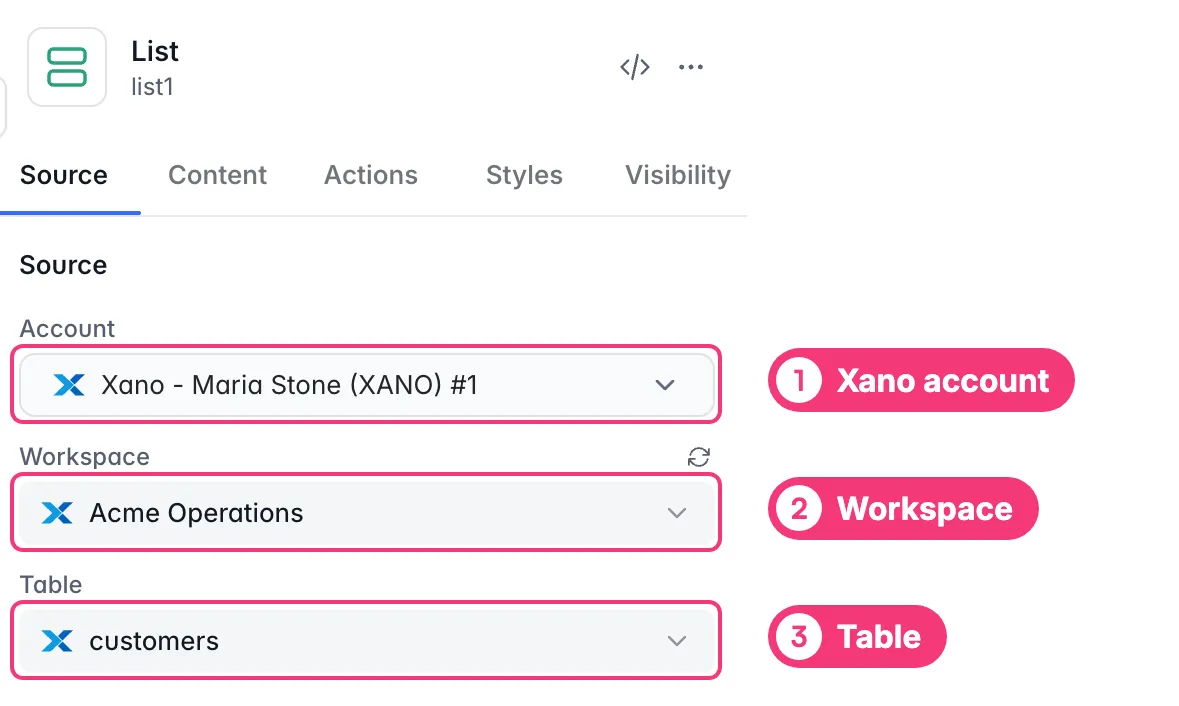
Connect Xano table to dynamic block

Map Xano fields to item fields
When you connect your table to a block, you can choose which Xano properties to display and map to Softr fields. This lets you control how your data appears in Softr.
-
Open the Content tab of the block settings.
-
Under Item fields, click Add and turn on the Xano properties you want to show.
-
Click a field to change how it displays. For example, select Image as the display type for an image field.
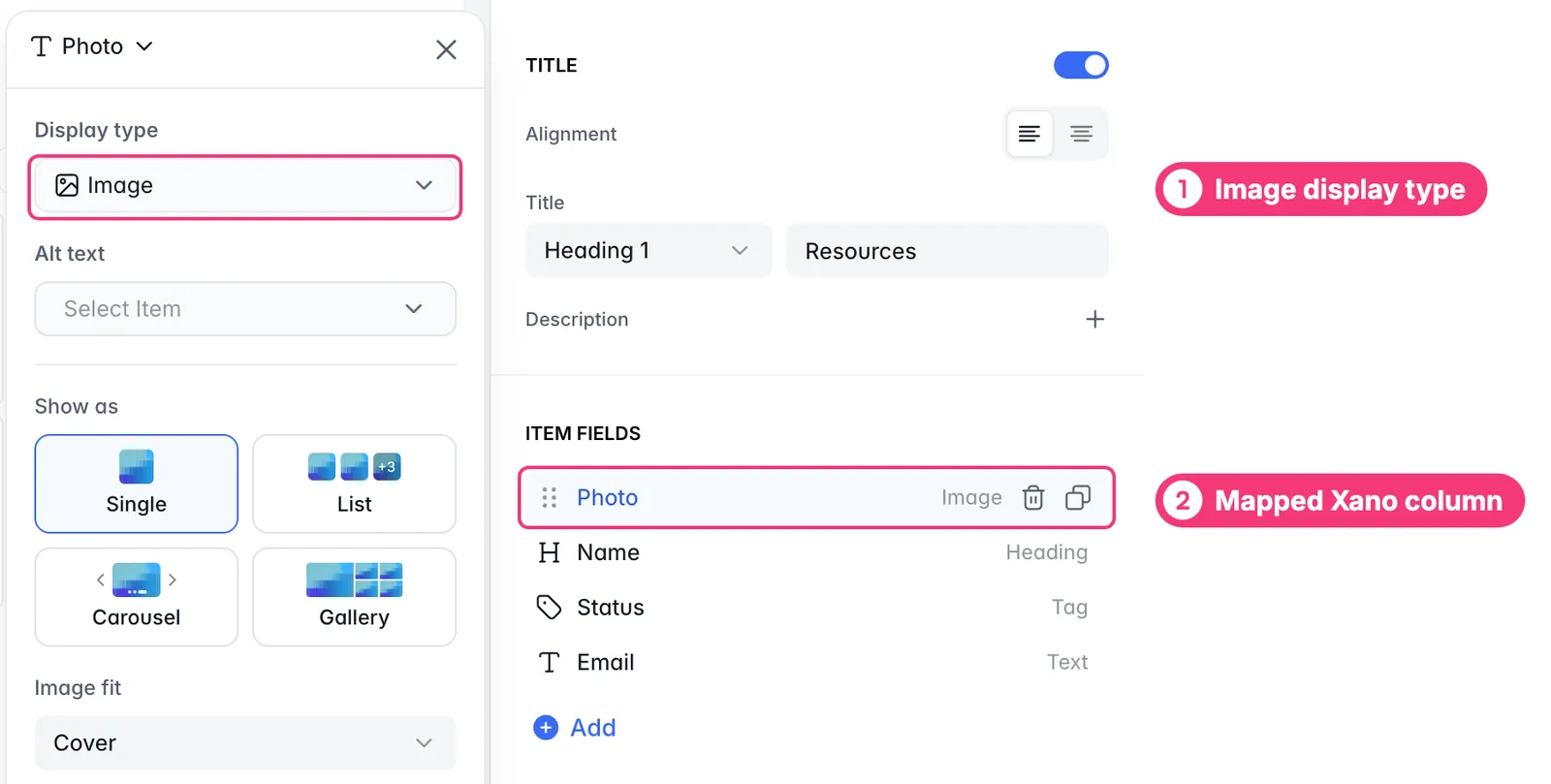
Map Xano fields to item fields

Example: If you have an email field in Xano, select an email field in Softr.