

Custom code is available for users on the Pro plan and above.
Adding a Custom code block
Custom code is added through the Custom Code block in Blocks => Static => Custom code.Adding the code inside the block
Next, you need to open the block settings and paste the code snippet you would like to add. It can contain standard HTML elements, elements containing custom CSS rules, and even tags containing JavaScript code.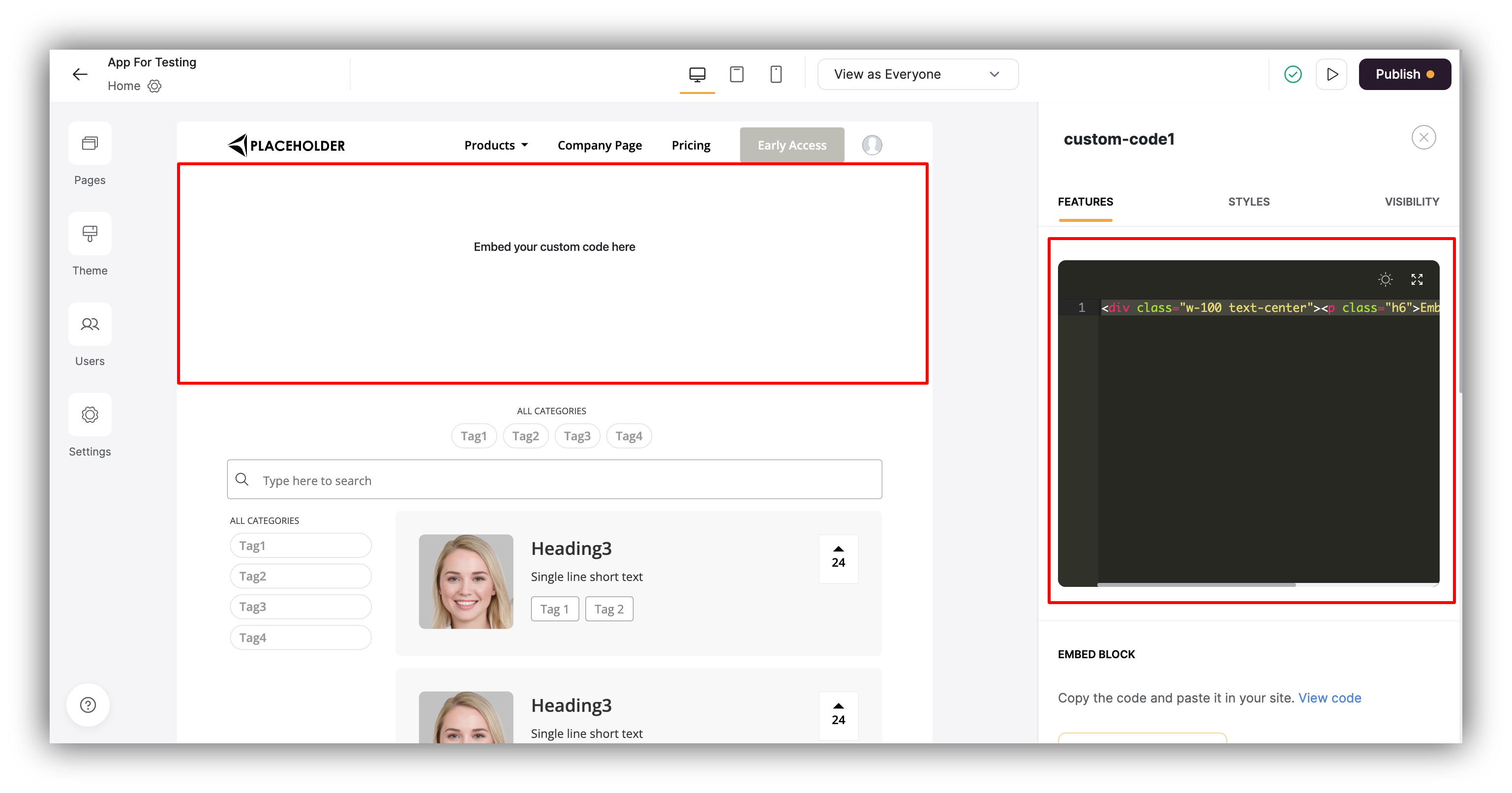
Custom Code block
Use Case - Embed Calendly in Softr app
Let’s see how the Custom Code block works on a specific example. We’ll use it to embed a Calendly widget within our Softr app.Getting the Embed Code
In our Calendly account, we are going to navigate to Share Your Link in the Account dropdown menu.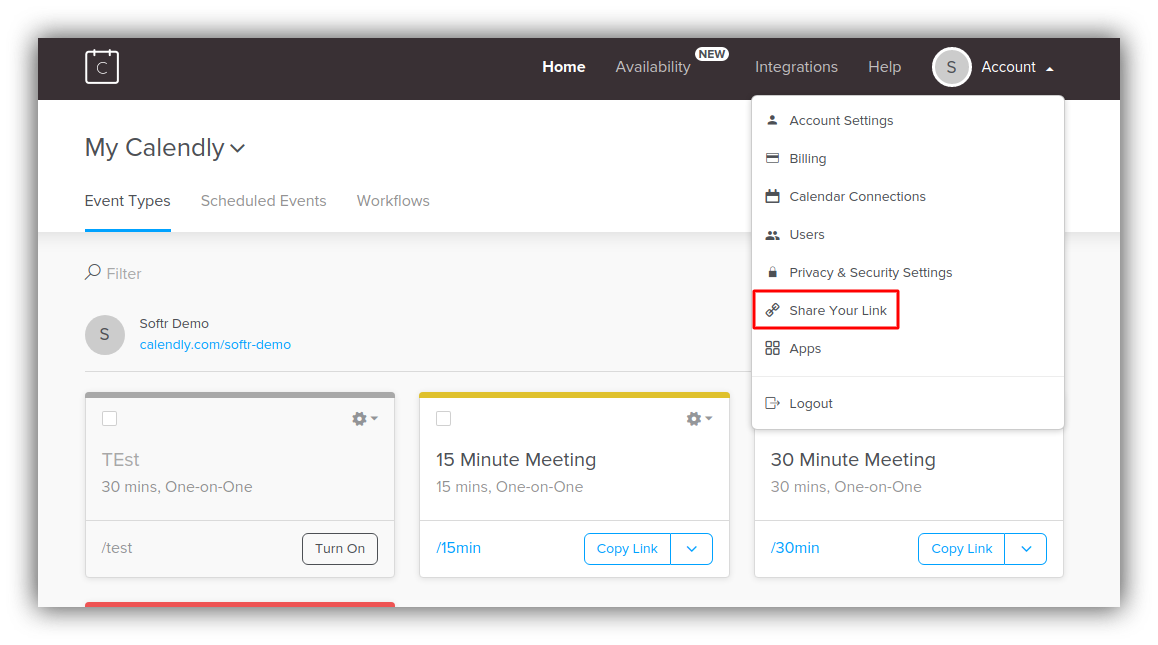
Share your link
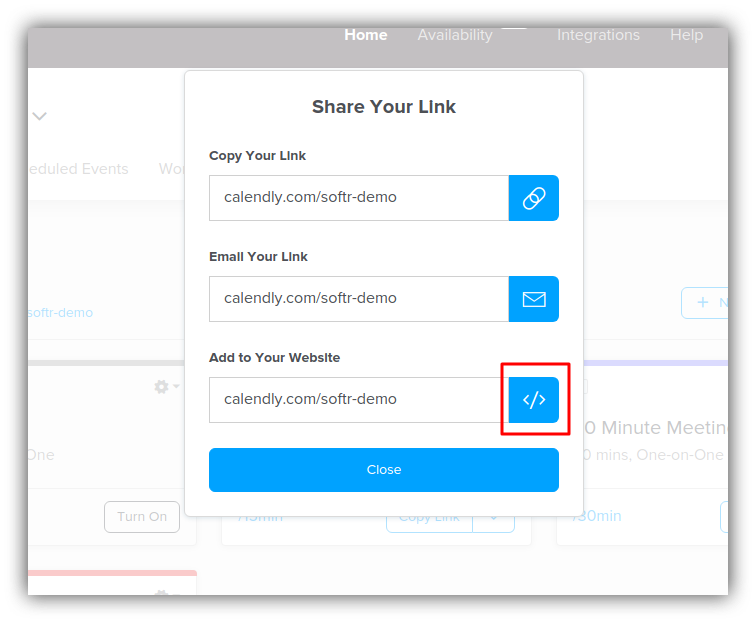
Selecting 'Add to Your Website'
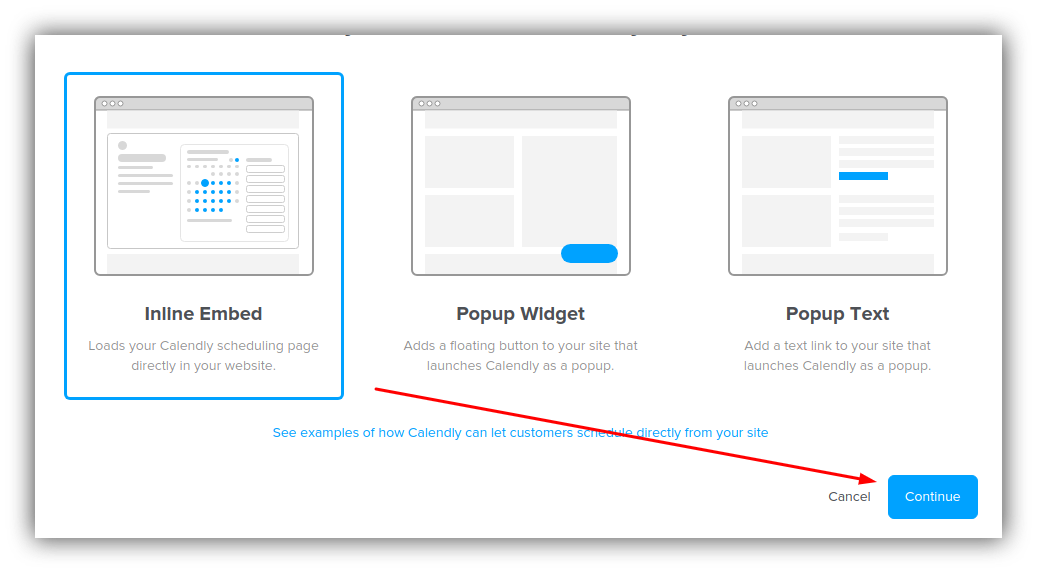
Choosing 'Inline Embed'
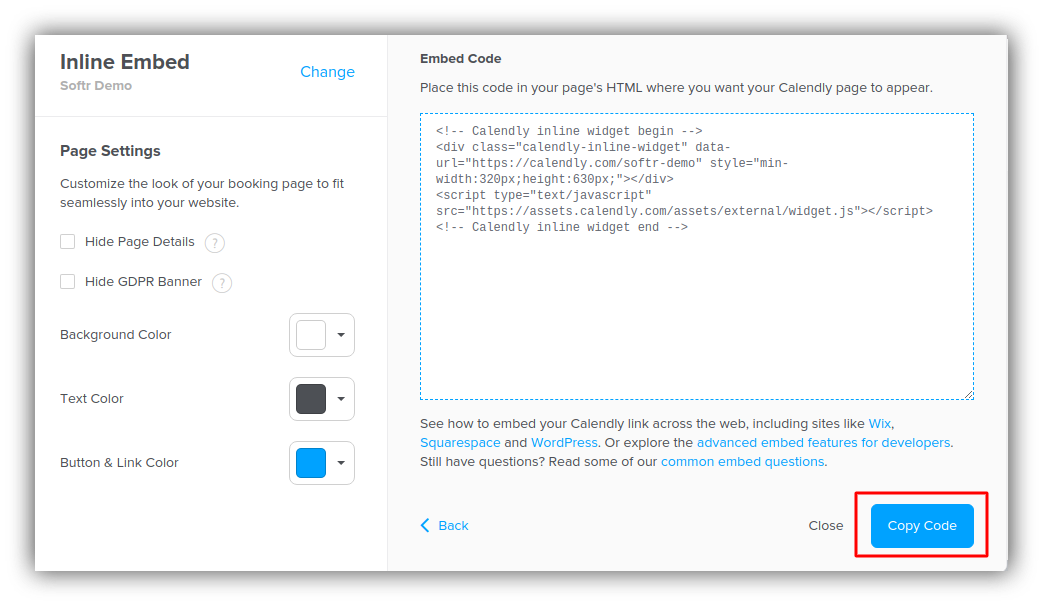
Copying the Calendly page code
Adding the code to the block
Finally, we will go back to our Softr app, paste the code in the Custom code block, and hit Preview to see what it looks like.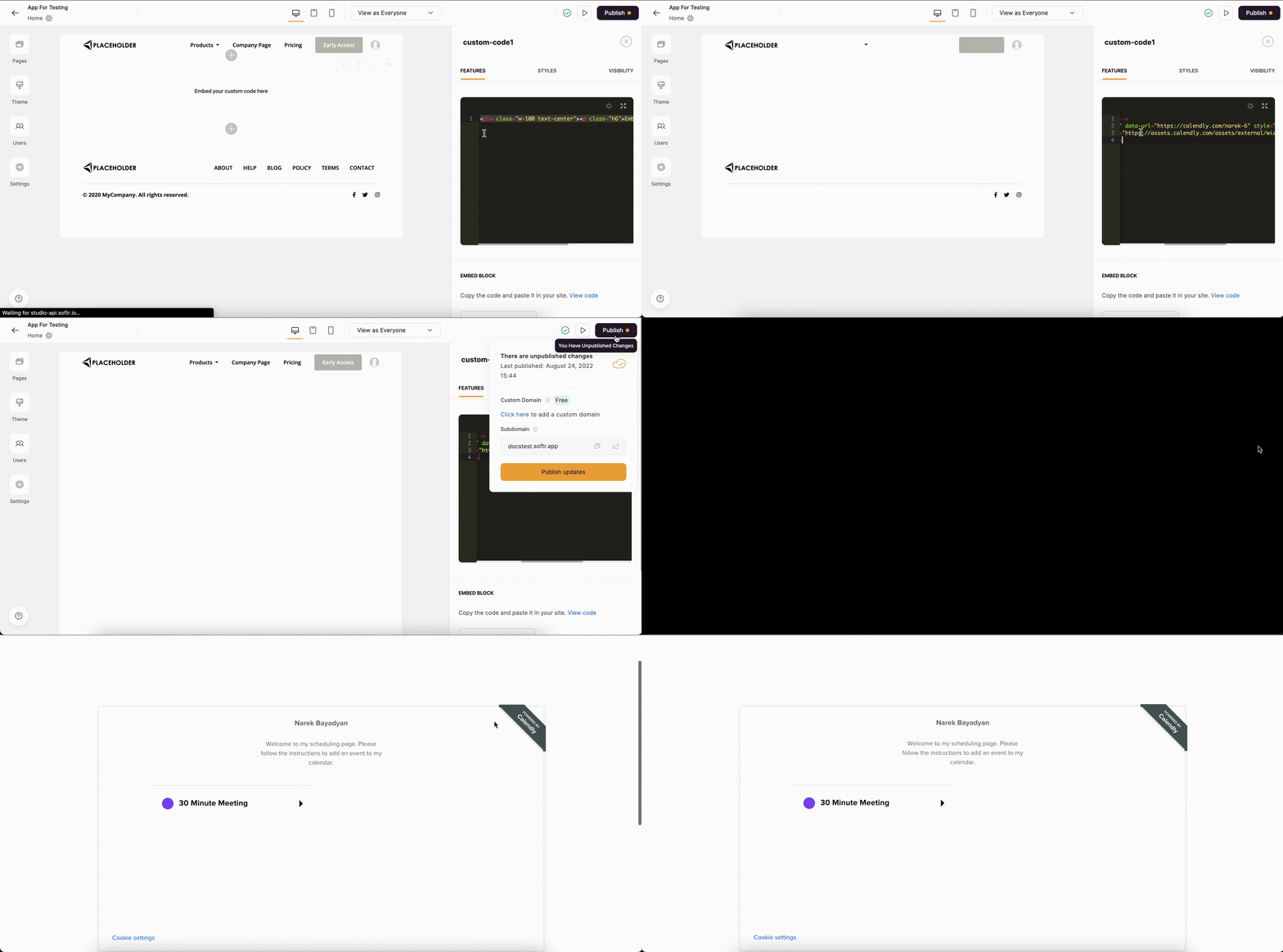
Applying the code
Guidelines for custom code in SPA mode
In SPA mode (Single-Page Application), custom code works a little differently than non SPA mode. Since we never do full page reload in the SPA mode, page level custom code needs to ensure that it doesn’t interfere with other pages.TL;DR
- Keep page specific code out of app level custom code.
- Whenever possible, use plain HTML/CSS instead of Javascript.
- Use
<script type="module">to avoid global name conflicts. - Instead of “DOMContentLoaded” in page level level custom code, wait for elements that you need using
window.SOFTR_PAGE.waitFor. - Use
window.SOFTR_PAGE.beforeUnloadto cleanup elements and timers before navigating to a new page. This function can be called multiple times to register several cleanup functions.
Keep page specific code out of app level custom code
Scripts in the App header/App footer custom code execute only once—on the first page load. They won’t re-execute when navigating between pages, unlike in non-SPA mode. To ensure your app looks consistent whether you’re navigating from another page or visiting directly via URL, keep page-specific code in custom code blocks on the page or in page-level custom code.Cleanup any dynamically inserted DOM nodes on page navigation
When navigating to a new page, HTML elements dynamically injected by JavaScript outside the custom code’s own scope won’t be automatically cleaned up. Use thewindow.SOFTR_PAGE.beforeUnload API to remove any dynamically rendered DOM nodes. This ensures that navigating from page A to page B doesn’t leave behind remnants from page A.
Here’s an example
Cleanup timers and resize observers on page unload
If your page custom code sets up timers or resize observers, they need to be cleaned up before the page unloads. This ensures that the timers don’t keep running after navigating away from the page. For example, here’s a custom code block which shows the number of seconds this page has been open forDon’t use DOMContentLoaded in page level custom code
DOMContentLoaded will only fire once, on app load. Navigating between the pages will not re-run the event listener. Instead,window.SOFTR_PAGE.waitFor provides a simple way to wait for an element to be on the page before continuing.